Nervous system regulation is the practice of restoring your body's ability to shift between alertness and calm on its own.
When chronic stress, burnout, or trauma disrupt that ability, your body gets stuck: wired but exhausted, anxious for no clear reason, unable to fully rest even when nothing is wrong.
This guide explains what's happening in your body, why it gets stuck, and the daily practices that help you get unstuck.
How Your Nervous System Works
Your nervous system controls everything. Your heartbeat, your digestion, your sleep, your energy, your focus, your mood, how you react to the world around you. Most of it happens without you being aware of it.
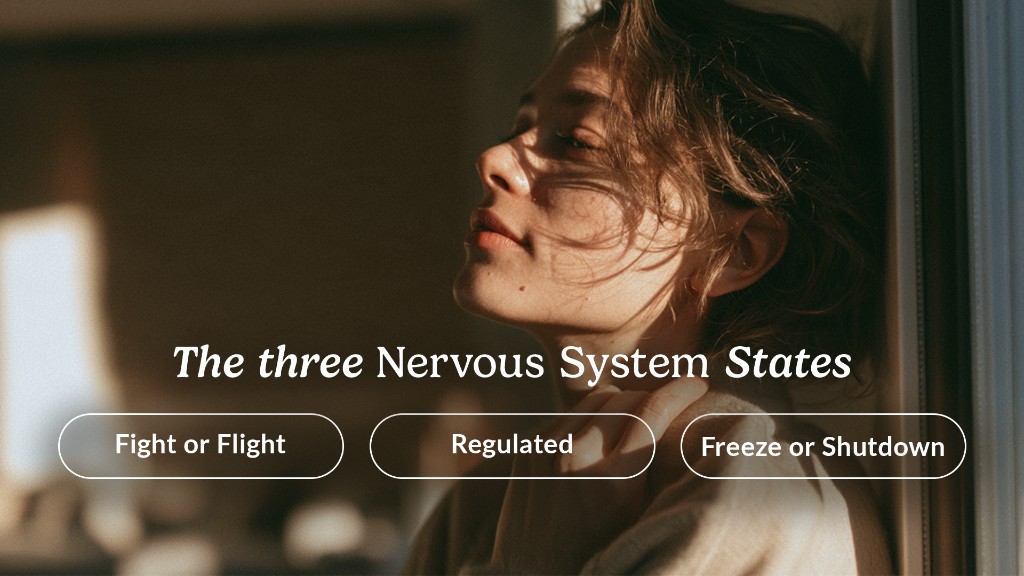
The part that matters for nervous system regulation has two modes.
The first is your body's gas pedal. It kicks in when you're under pressure: heart rate goes up, muscles tense, breathing gets shallow, senses sharpen. This is the fight-or-flight response. It triggers a cascade of physical changes designed to help you survive danger.
The second is your brake. It brings everything back down: heart rate slows, muscles relax, digestion restarts, your body gets the signal that it's safe. This is where rest, recovery, and repair happen.
When these two modes work together, your body responds to what's happening and then comes back to its baseline. That's a well regulated nervous system.
What Happens When Your Nervous System Is Dysregulated
Modern life doesn't let the gas pedal come back up. Constant notifications. Back-to-back meetings. Financial pressure. Relationship strain. News cycles designed to keep you alarmed. Sleep deprivation. Your nervous system cannot tell the difference between a bear and a late-night email marked urgent. It responds to both the same way.
As Harvard Health explains, chronic stress keeps your body's alarm system running long after the original threat has passed, flooding your system with cortisol and keeping your body in a state of constant readiness.
When the gas pedal stays stuck for weeks, months, or years, your body learns that "high alert" is normal. The brake tries to kick in but it can't override the gas pedal anymore. Eventually the system gets overwhelmed and shuts off.
Whether it shows up as constant anxiety and racing thoughts, or as numbness and losing interest in everything, or as swinging between both, these are signs of a dysregulated nervous system.
I know this because I lived it. After years at a high-intensity tech company, my body had learned that survival mode was the only mode. I couldn't turn it off. I realized that something was wrong and that I needed to do something about it.

Signs Your Nervous System Is Dysregulated
So how do you know if your nervous system is stuck? It shows up in two very different ways.
Stuck on High Alert: The Hyperarousal Signs
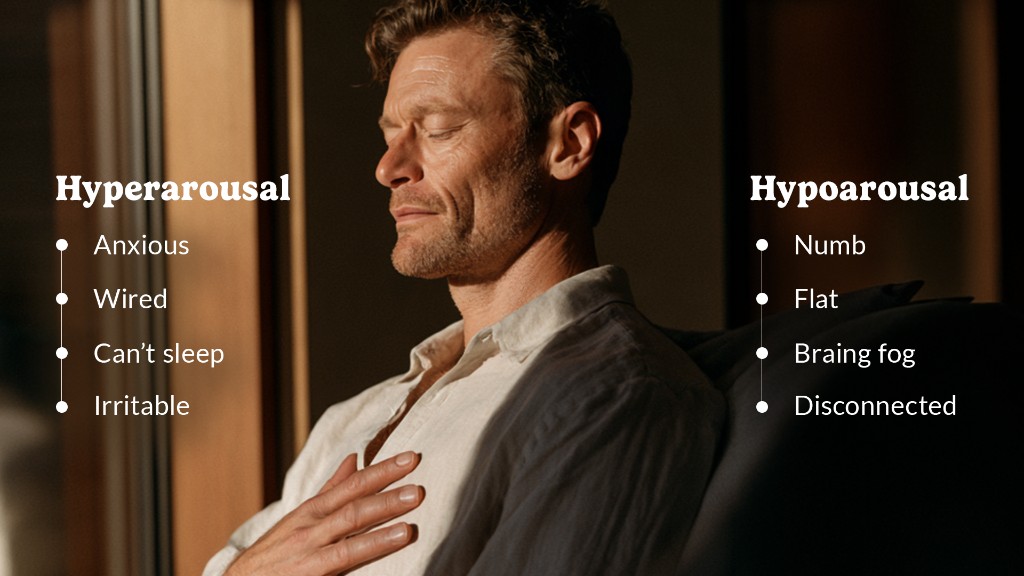
This is the one most people know. Your mind races through worst-case scenarios at 2am. You can't fall asleep even though you're exhausted. Small things make you jump: a Slack notification, a car horn, someone raising their voice slightly.
Your jaw is always clenched. Your shoulders live somewhere near your ears. You feel irritable and short-tempered for no obvious reason. Your digestion is off. Your heart rate feels elevated even when you're sitting still.
If you've ever felt "wired but tired," that's your nervous system stuck on high alert.
Stuck in Shutdown: The Hypoarousal Signs
It looks like numbness. Emotional flatness. Brain fog so thick you can't remember what you walked into a room for. Sleeping 10 hours and still feeling exhausted. Feeling disconnected from your own body, like you're watching your life from behind glass. Zoning out in conversations. Unable to feel motivated or engaged by things that used to matter to you.
Many people experience this as depression. And it can be. But it's also the nervous system's protective shutdown response. When your body decides the threat is too overwhelming to fight or flee from, it shuts down instead.
This state is just as dysregulated as hyperarousal, but it gets far less attention because it's quiet.
Some people oscillate between both extremes: wired and anxious one day, completely flat the next. That oscillation is itself a sign that your nervous system is dysregulated.
If any of this sounds familiar, the question becomes: what do you actually do about it?
Nervous System Regulation Exercises and Techniques
Think of nervous system regulation like going to the gym. One workout doesn't change your body. But show up every day, do the work, and over time you get stronger. Your nervous system works the same way. The practices below are the exercises. Your nervous system is the muscle.
So how do you regulate your nervous system when it's stuck?
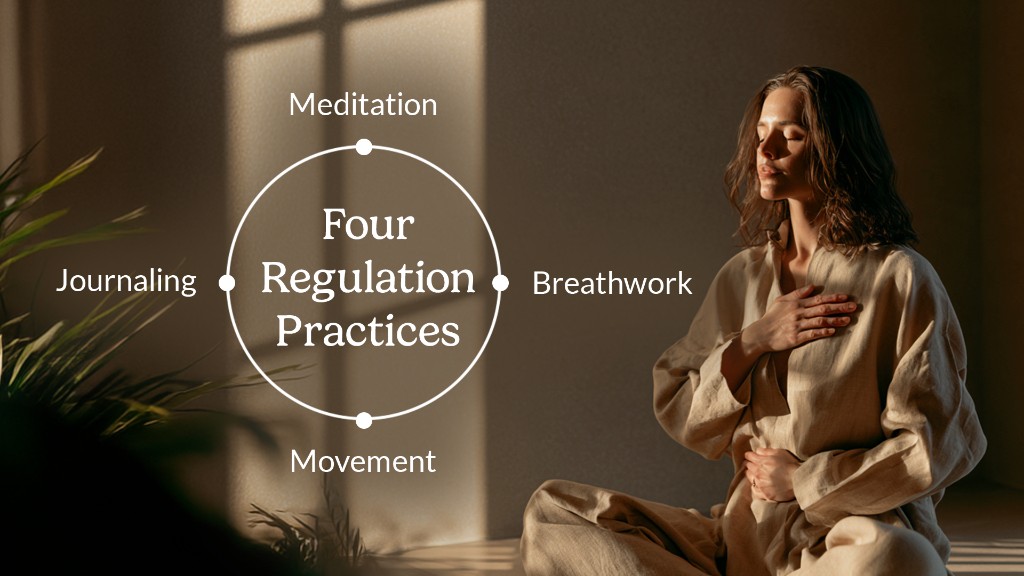
The vagus nerve connects your brain to your heart, lungs, and gut. These practices work by signaling safety directly through that pathway. Each one addresses a different layer of your nervous system regulation practice. You can explore specific guided practices across all of these categories, along with the research behind each technique.
How Breathwork Supports Nervous System Regulation
Breathing is the only autonomic function you can also control voluntarily. That makes breathwork the most accessible entry point for nervous system regulation.
When you extend your exhale longer than your inhale, you activate the parasympathetic nervous system through the vagus nerve.
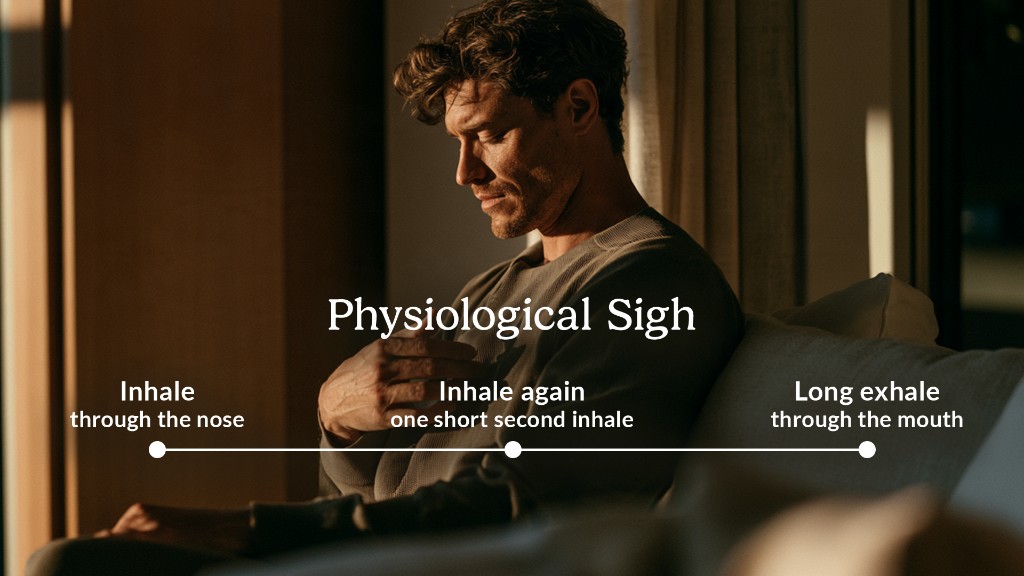
A Stanford study found that just five minutes of daily breathwork, specifically a technique called Cyclic Sighing (double inhale through the nose, slow exhale through the mouth), reduced anxiety and improved mood more effectively than mindfulness meditation alone. The positive effects increased with each consecutive day of practice.
Separately, research published in Scientific Reports confirmed that slow breathing measurably increases vagal tone and reduces anxiety, even in a single session.
Specific techniques to try:
- Cyclic Sighing: Two quick inhales through the nose, one long exhale through the mouth. Takes under 60 seconds. Immediate calming effect.
- Box Breathing: Inhale for 4 counts, hold for 4, exhale for 4, hold for 4. Repeat 4 times.
- 4-6 Breathing: Inhale for 4 counts, exhale for 6-8 counts. The longer exhale activates the parasympathetic response.
Breathwork is powerful because it works in the moment (you can shift your nervous system state in 60-90 seconds) AND it builds long-term resilience when practiced consistently. For a full breakdown of breathwork techniques and how to start a daily practice, read this breathwork for beginners guide.
Movement That Calms Instead of Drains
Movement helps regulate the nervous system by completing the stress cycle.
When stress activates your body, it prepares you to physically move. If you never move, that energy stays trapped. It shows up as tension in your neck, tightness in your chest, restless legs, clenching your jaw without realizing it. Your body is holding the action it never got to complete. Gentle, rhythmic movement gives the nervous system a clear signal: the threat is over.
The type of movement that helps depends on your current state.
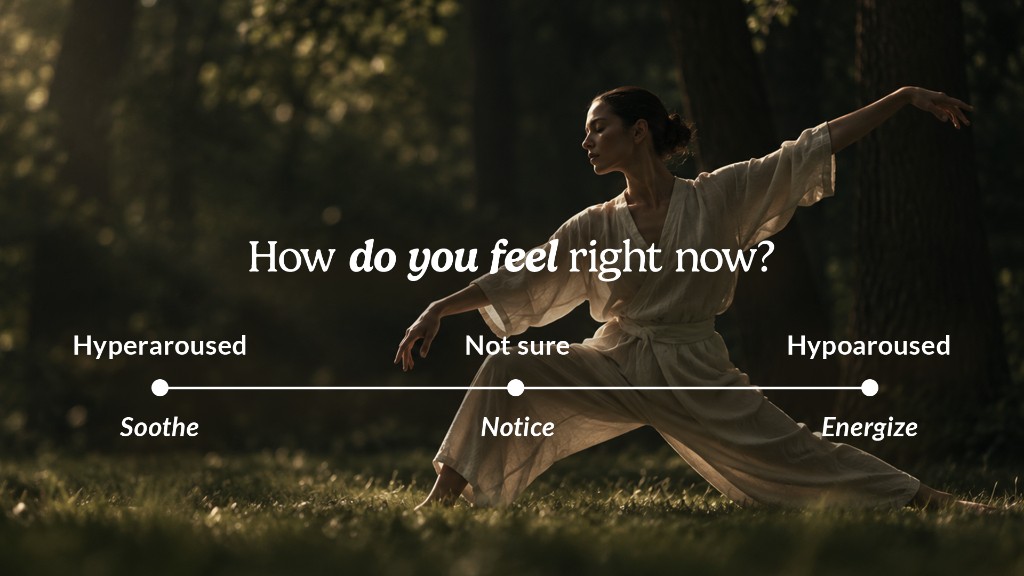
If you're stuck in hyperarousal (anxious, wired, can't sit still), slow and grounding movement works best. Walking, yoga, gentle stretching, swimming.
If you're stuck in hypoarousal (numb, flat, disconnected), more activating movement helps bring energy back online. Brisk walking, dancing, light resistance training, even shaking your body for a few minutes.
Regular exercise also improves vagal tone over time, strengthening the parasympathetic system's ability to bring you back to baseline after stress. For a deeper look at how movement specifically works on the nervous system and which practices match different states, read this guide to nervous system regulation exercises through movement.

Meditation and Mindfulness as Awareness Training
Meditation builds the skill of noticing your nervous system state without reacting to it. This is different from relaxation.
Body scan meditations, in particular, train what's called interoception: the ability to sense what's happening inside your body.
One thing worth saying: meditation isn't for everyone in every state. If sitting still makes you more anxious, that's not a failure. That's your nervous system telling you it needs a different tool right now, like movement or breathwork first. The meditation for emotional healing guide walks through how to match the technique to the emotional state you're actually in.
Meditation tends to work best as a complement to other practices, not as the only practice.
What meditation adds to your nervous system regulation practice is the ability to notice when you're dysregulated before it takes over. Instead of reacting automatically, you start catching it: "my system is activated right now." That awareness gives you the space to choose a tool instead of being pulled into a spiral. Over time, you respond to stress instead of being hijacked by it.
Journaling to Recognize Your Patterns
Journaling addresses the cognitive layer of your nervous system regulation practice.
Writing about what triggered a stress response, what it felt like in your body, and what helped you come back to baseline creates a feedback loop. Over time, you start recognizing your own patterns. A simple entry might look like: "Woke up feeling flat. No energy for anything. Went for a 10 minute walk. By the time I got back I could think clearly again. Afternoons are usually easier than mornings for me."
Maybe meetings dysregulate you, but a 5-minute breathing session afterward resets you. Maybe mornings are harder than afternoons. Maybe certain people or environments push you into shutdown without you realizing it until hours later.
This self-knowledge is what makes your practice personal rather than generic.

Why Nervous System Regulation Is a Daily Practice, Not a Quick Fix
When people first decide to work on regulating their nervous system, their instinct is to do everything at once. Hour-long yoga sessions. 30-minute meditations. Cold plunges. Supplements.
The research points in the opposite direction.
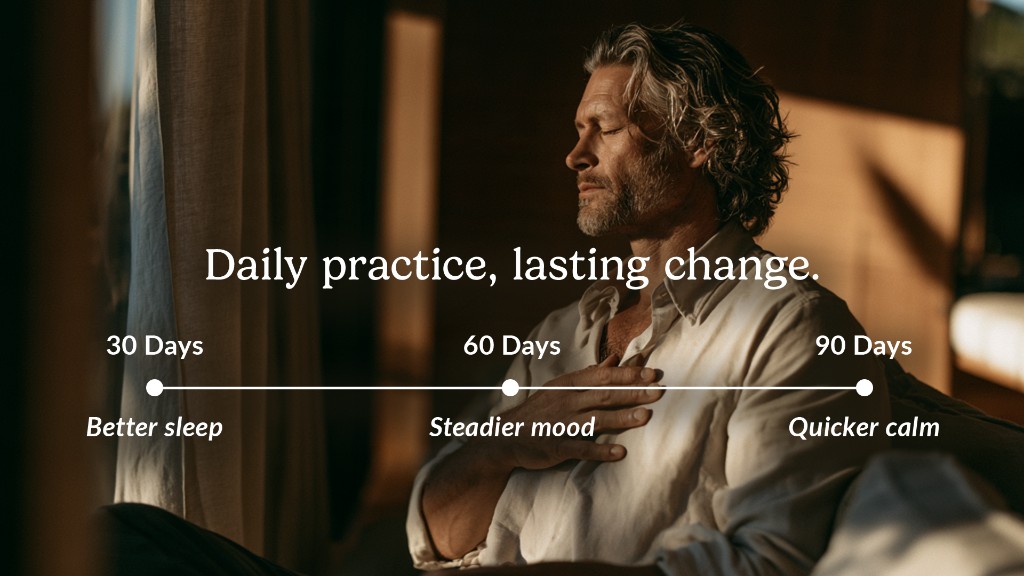
A study of 280,000 sessions found that consistency mattered more than duration. People who practiced 4-7 days per week saw greater improvements in mood and resilience than those who practiced longer but less frequently. Consistency was a stronger predictor of improvement than session length.
Realizing this was the game changer for me. I had heard it before from others but I didn't believe it. Or maybe I didn't want to believe it.
A short breathwork session every morning. A 10-minute walk after lunch. Three minutes of journaling before bed. Small, repeatable, sustainable.
Your nervous system rewires through repetition, not intensity. Every time you practice returning to calm, you're strengthening that neural pathway. Over time, the path back to baseline gets shorter and easier to find.
After 30 days of consistent daily breathwork, just 10 minutes each morning, I noticed that the calm I felt right after the practice was lasting longer through the day. The days felt steadier. The longer I practiced, the steadier I got. I'm on a year and a half streak with my breathwork now.
One Size Does Not Fit All: Personalizing Your Practice
The reason most people start a nervous system regulation practice and quit is not lack of willpower. It's a mismatch between the technique and their current state.
If you recognized yourself in the hyperarousal signs from earlier, start with slow breathwork, gentle movement, and grounding practices. These down-regulate your system.
If the hypoarousal signs hit closer to home, start with activating breathwork, brisk movement, and cold water on the face. These up-regulate your system.
If you swing between both, start with body awareness practices like body scans and journaling to learn which state you're in before choosing a tool.
Breathtaking's multi-modal, personalized approach to nervous system regulation has been reviewed and endorsed by a clinical psychologist. You can also see how a personalized daily practice is built inside the app, or start regulating your nervous system with Breathtaking.
Frequently Asked Questions About Nervous System Regulation
How long does nervous system regulation take?
Most people notice the first shifts in sleep quality and baseline anxiety within 2-4 weeks of daily practice. Deeper changes typically take 2-3 months of consistent work. Short daily sessions (even 5-10 minutes) produce better results than longer, infrequent sessions.
What does nervous system regulation feel like when it's working?
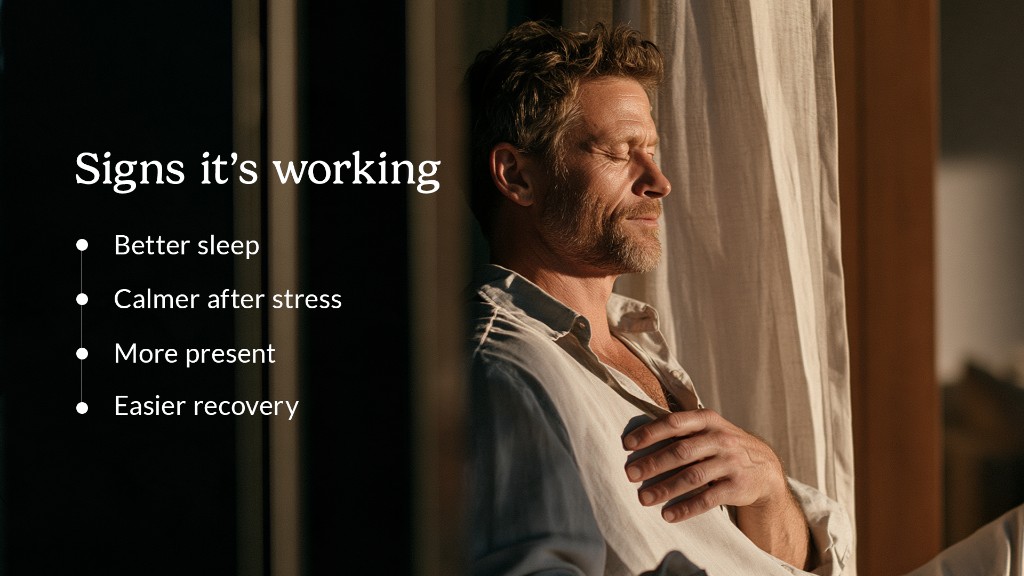
You still feel stress, but you recover from it faster. You sleep through the night. Your digestion improves. You feel present in conversations instead of scanning for threats. A well regulated nervous system doesn't eliminate stress. It restores your ability to bounce back from it.
Can nervous system regulation help with anxiety?
Yes. Anxiety is one of the most common signs of a dysregulated nervous system stuck in hyperarousal. Breathwork and gentle movement directly activate the parasympathetic nervous system and lower physiological arousal. Studies show daily breathwork reduces anxiety more effectively than meditation alone. It's not a substitute for professional treatment, but it's a powerful complement.
What are the best nervous system regulation exercises for beginners?
Start with Cyclic Sighing: two quick inhales through the nose followed by one long exhale through the mouth. Takes under 60 seconds. From there, add a 10-minute daily walk and 3 minutes of journaling. That gives you a foundation covering breath, movement, and awareness. Start small. Stay consistent.

Alex is the founder of Breathtaking and a former Google Engineer and Product Manager. After experiencing burnout, he spent six months rebuilding himself through breathwork, meditation, and ancient philosophy. He now builds tools to help others do the same.