Breathwork can feel overwhelming for beginners because there are dozens of techniques and most guides don't explain which ones actually matter or why. This guide breaks down what breathwork is, how different techniques affect your nervous system in different ways, and how to start a practice you can actually maintain.
What Is Breathwork?
Breathwork is the practice of intentionally changing your breathing pattern to shift how your body and mind feel. You're not just taking deep breaths and hoping for the best. You're using specific patterns of inhaling, exhaling, and holding to send direct signals to your nervous system.
People have been doing this for thousands of years. In the yogic tradition, it's called pranayama, and it dates back to 1500 BCE. Sufi practitioners use rhythmic breathing paired with sacred phrases. Kundalini yoga uses breath patterns combined with movement to shift energy. Every major contemplative tradition on the planet discovered that controlling the breath changes your internal state.
What's changed is that modern science now explains why. A meta-analysis of 12 randomized controlled trials found that breathwork significantly reduces stress, anxiety, and depressive symptoms compared to non-breathwork controls. The data is consistent across studies and populations.
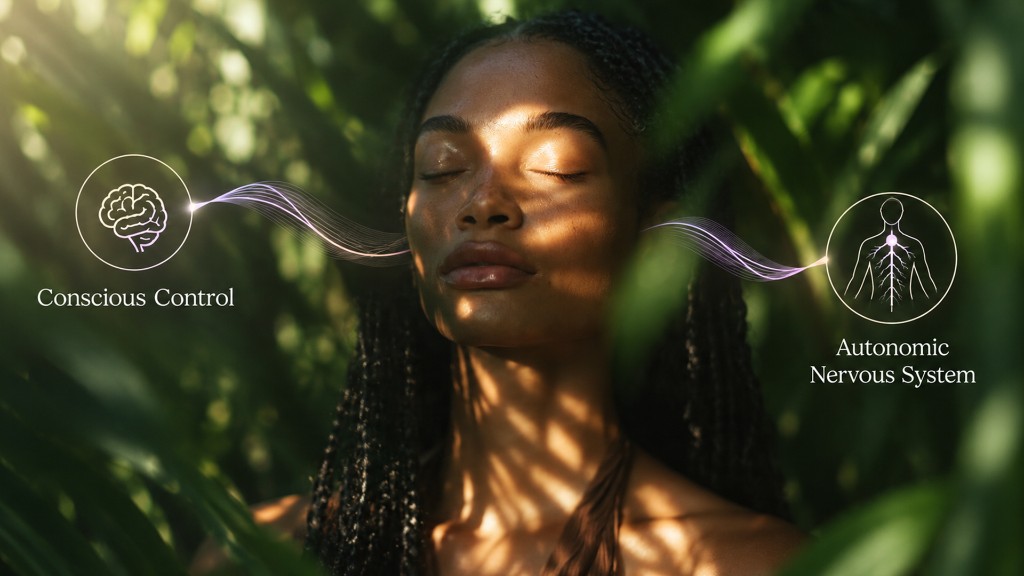
The reason breathwork matters right now is that most people's nervous systems are running on overdrive without them knowing it. If you've been dealing with chronic stress, burnout, anxiety, or sleep problems, breathwork is one of the most direct ways to intervene because your breath is the only part of your autonomic nervous system you can consciously control.
For a deeper look at how nervous system regulation works and why your system gets stuck, start there.
How Breathwork Affects Your Nervous System
Your nervous system has two modes that matter here.
The first is your stress response. It speeds everything up: heart rate, muscle tension, shallow breathing, heightened alertness. This is useful when you're in actual danger. It becomes a problem when it's running all day every day because of work pressure, financial stress, relationship strain, and constant notifications.
The second is your recovery response. It slows everything down: heart rate drops, muscles relax, digestion restarts, your body gets the signal that it's safe.
The bridge between these two modes is the vagus nerve, which runs from your brain to your heart, lungs, and gut. A systematic review of psycho-physiological research found that slow, controlled breathing increases parasympathetic activity through the vagus nerve, reducing anxiety, depression, and physiological stress markers. A separate meta-analysis of 223 studies confirmed that these benefits compound over time with consistent practice.
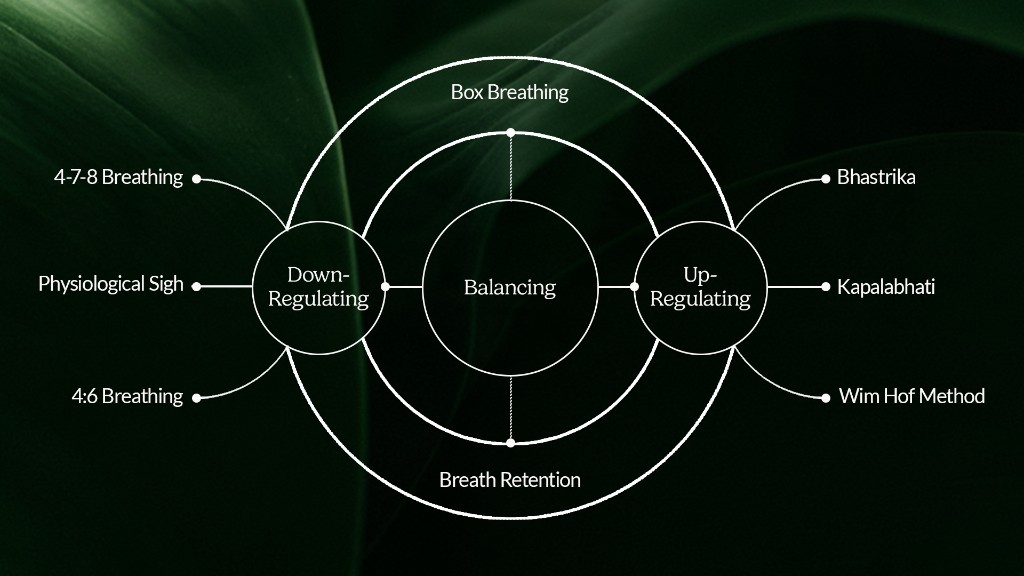
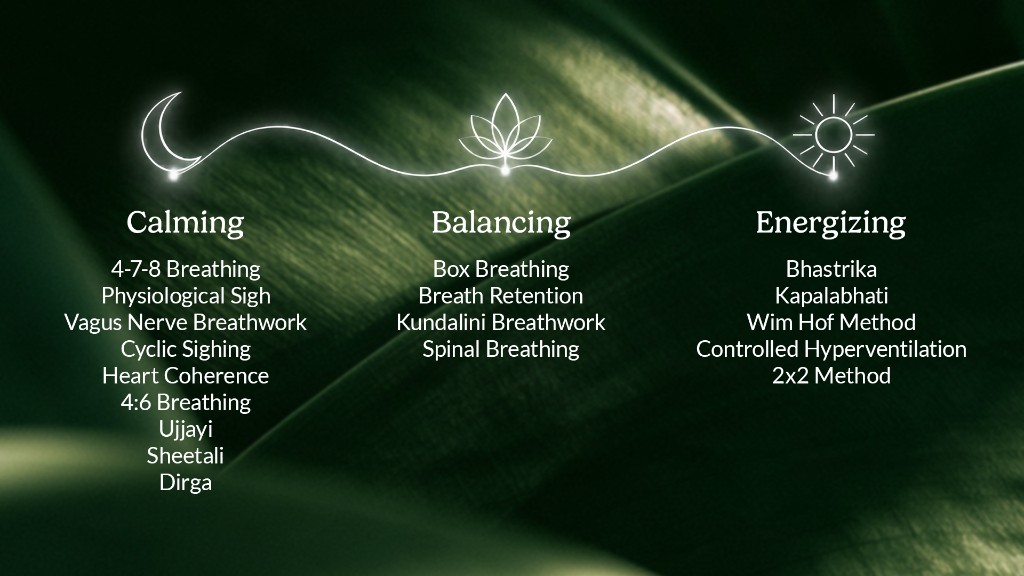
Different breathing patterns send completely different signals to your nervous system. Some techniques slow your system down. Some speed it up. Some bring it into balance. Understanding this is the difference between grabbing a random technique off the internet and actually using breathwork to give your body what it needs.
You can explore the research behind each technique in more detail.
Down-Regulating Techniques: Slowing Your System Down
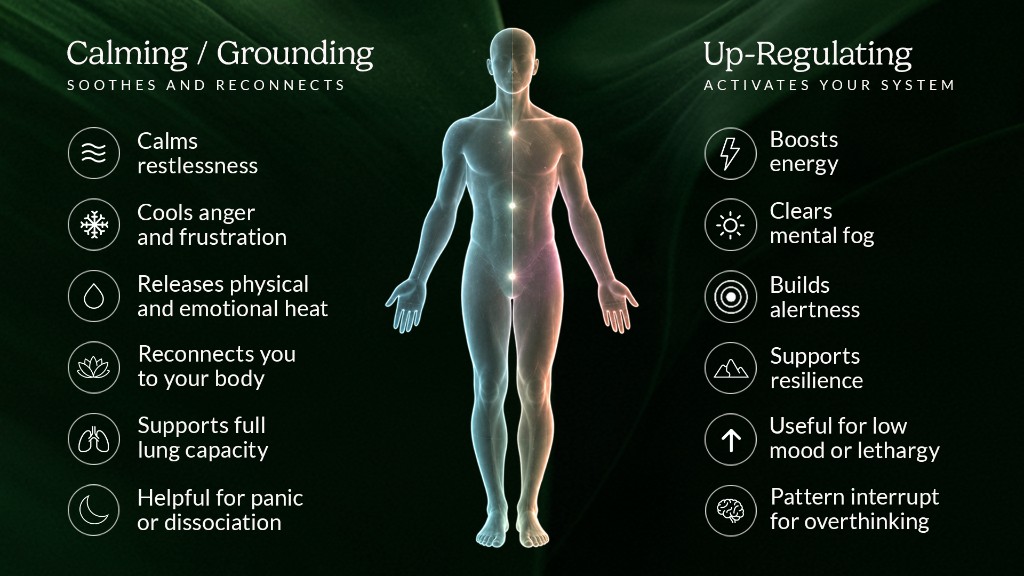
These techniques activate the parasympathetic response through the vagus nerve. They're what you reach for when you're anxious, wired, can't sleep, or your mind won't stop racing. If you're new to breathwork and dealing with stress or anxiety, this is where most people start.
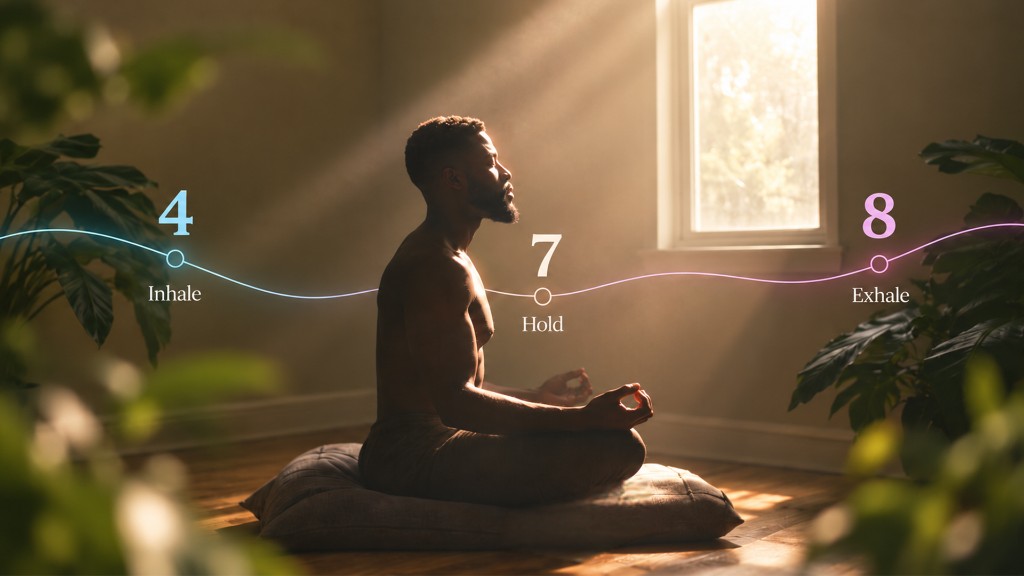
4-7-8 Breathing. Inhale for 4 counts, hold for 7, exhale for 8. Developed by Dr. Andrew Weil from ancient pranayama. Research shows it decreases heart rate and blood pressure while increasing parasympathetic activity in a single session. One of the most effective techniques for sleep and acute anxiety.
Cyclic Sighing. Two quick inhales through the nose (one full, one short top-up), then a long slow exhale through the mouth. Discovered at Stanford as the body's natural calming mechanism. Use 1-2 sighs for acute relief, or repeat for 5 minutes as a daily practice that outperformed mindfulness meditation in Stanford research.
Vagus Nerve Breathing. Longer exhales than inhales at a 4:8 or 5:10 ratio. Based on polyvagal theory and direct vagus nerve stimulation. Effective for anxiety, digestive issues, and social anxiety.
Heart Coherence. 5 seconds in, 5 seconds out, while focusing attention on the heart area. Developed by the HeartMath Institute from heart rate variability research. Used for emotional regulation and building intuitive awareness.
4-6 Breathing. Inhale for 4 counts, exhale for 6. A simple 2:3 ratio that's accessible for anyone. If you're looking for the easiest breathwork for beginners entry point, this is it because the pattern is so simple to remember and the extended exhale naturally calms your system.
Ujjayi. Slight throat constriction creates a soft ocean-like sound on both inhale and exhale. A core breath in yoga practice for over 2,000 years. Useful for sustained focus and calming restlessness.
Sheetali (Cooling Breath). Roll your tongue into a tube, inhale through it, exhale through your nose. Sanskrit for "cooling," traditionally used to reduce physical and emotional heat. Good for anger, frustration, and overheating.
Three-Part Breath (Dirga). Inhale in three stages: belly, ribs, chest. Exhale in reverse order. This is the foundation pranayama practice that teaches you how to use your full lung capacity. Particularly helpful for panic attacks and feelings of dissociation because it reconnects you to your body.
Up-Regulating Techniques: Activating Your System
These techniques stimulate the sympathetic response in a controlled way. They're what you reach for when you're flat, numb, foggy, low energy, or struggling to get going in the morning. They're essential if your nervous system is stuck in shutdown rather than overdrive.
Bhastrika. Forceful belly breathing with strong inhales and exhales. Named after a blacksmith's bellows in Sanskrit. Effective for morning lethargy, mental fog, and low mood.
Kapalabhati. Sharp belly exhales with passive inhales, 20-30 rounds. A traditional pranayama technique that clears mental fog and opens the sinuses. Good for morning wake-up and building alertness.
Wim Hof Method. 30 power breaths followed by an exhale-hold and a recovery breath. A modern method combining elements of ancient Tummo breathing with cold exposure principles. Used for building resilience, boosting energy, and developing mental toughness.
Controlled Hyperventilation. Intentional overbreathing for set periods, used in holotropic breathwork and rebirthing traditions. This can bring up intense emotional and physical responses.
Balancing Techniques: Finding Center
These techniques don't push your system in either direction. They help stabilize and maintain equilibrium.
Box Breathing. Equal counts: inhale 4, hold 4, exhale 4, hold 4. Used by Navy SEALs for maintaining clarity under pressure. Research confirms its effectiveness for stress management in high-stakes situations.
Kundalini Breathwork. Various rhythmic patterns combined with movement and holds. From the Kundalini yoga tradition of energy activation. Used for breaking deep patterns, emotional release, and personal transformation. This is the practice that changed my life, and I'll share more about that below.
Spinal Breathing. Visualize breath moving up the spine on the inhale and down on the exhale. Links breath to subtle energy channels (called nadis in the yogic tradition). Used for mental clarity, energy movement, and meditation preparation.
Sufi Breathing. Rhythmic breathing while repeating sacred phrases (dhikr). An Islamic mystical practice for remembrance and heart opening. Used for spiritual connection, emotional healing, and cultivating inner stillness.
Uddiyana Bandha. Full exhale, pull the abdomen in and up, hold while empty. An advanced yogic lock technique. Used for digestive issues and core activation.
You can find all of these techniques inside Breathtaking's technique library.
Which Breathwork Technique Is Right for You
With 20+ techniques to choose from, the question every beginner asks is "which one should I start with?"
If you're anxious, wired, and can't switch off, start with 4-6 Breathing. Inhale for 4 counts, exhale for 6. The extended exhale activates your calming response and the pattern is simple enough to remember without looking anything up. Do it for 5 minutes every morning for two weeks.
If you're numb, flat, and struggling to get out of bed, start with Bhastrika. Strong inhales and exhales from the belly, 20-30 rounds. It brings energy back online without requiring you to already have energy to start.
If you're somewhere in the middle, start with Box Breathing. Inhale 4, hold 4, exhale 4, hold 4. It won't push you in either direction, just steady you.
Pick the one that matches where you are right now and do it tomorrow morning.
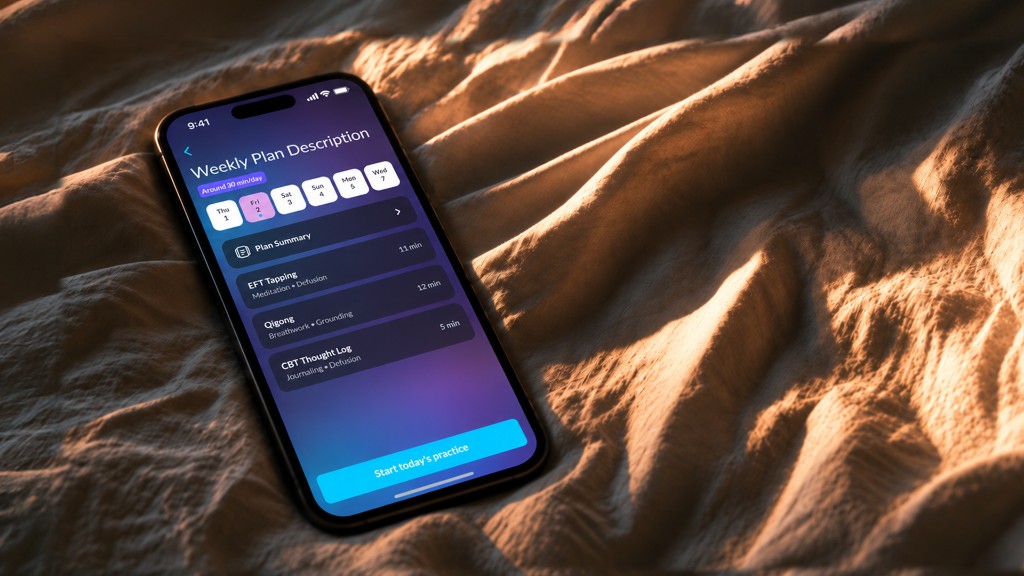
Breathwork is one of the most direct ways to work with your nervous system, but it's not the only one. Movement, meditation, and journaling each play a role too, and what you need on any given week depends on where you are. That's why Breathtaking figures out your personality and how you're feeling, and recommends a practice that fits. Here's how it works.
How to Build a Practice
Make it small. Start with the least possible time. 5 minutes is enough. If 5 minutes feels like too much, do 2. The size of the practice matters less than whether you did it at all.
Attach it to something you already do. Right after you wake up, right before bed, right after your morning coffee. Connecting your practice to an existing habit removes the decision of "when should I do this."
Don't judge the sessions. Some days will feel like a reset. Other days will feel like nothing happened. Both count. The nervous system doesn't change based on how a single session felt. It changes based on how many days in a row you showed up.
Give it a few weeks before you evaluate. Research shows that the benefits of daily practice compound over time but don't always show up in the first few weeks. If you quit at week 2, you're stopping right before the changes start to stick.
Starting a practice when you're already exhausted, anxious, or depressed is incredibly hard. When your nervous system is stuck in shutdown, everything feels pointless before you even begin.
I know this because I've been there. After years working in a high pressure environment, my nervous system was stuck in survival mode. I tried therapy, EMDR, hypnosis, and every meditation app. Nothing stuck because none of it was consistent enough or personalized enough to make a difference.
Then I found Kundalini pranayama and committed to 10 minutes every morning. After 30 days, the calm I felt right after the practice started lasting longer through the day. The days felt better. The longer I practiced, the better I got. I'm on a year and a half streak now.
That experience is why I built Breathtaking. I needed a tool that would tell me what to practice based on who I am and how I was actually feeling. Nothing like that existed.
You can read the full story here.
Start regulating your nervous system with Breathtaking and try your first personalized practice.
Frequently Asked Questions About Breathwork for Beginners
Does breathwork really work?
Yes. A 2023 meta-analysis of 12 randomized controlled trials found that breathwork significantly reduces stress, anxiety, and depressive symptoms. It works by activating the vagus nerve and shifting your nervous system from its stress response to its recovery response. The effects are measurable in a single session and they compound with consistent practice over weeks and months. For people new to breathwork for beginners, the first noticeable shifts usually appear within 2-4 weeks of daily practice.
What is the difference between breathwork and meditation?
Meditation typically involves observing your thoughts without reacting to them. Breathwork is more active. You're deliberately changing your breathing pattern to produce a specific physiological response in your body. Many people who struggle with traditional meditation (including myself) find breathwork as an entry point to meditation, it naturally brings you into meditative space where you can stay after the breathwork. For a full breakdown of meditation techniques and when to use each one, read this guide to meditation for emotional healing.
How long should a breathwork session for beginners be?
Start with 5 minutes daily. Research shows that breathwork sessions as short as 5 minutes are effective for stress reduction, and consistency matters more than duration. As a beginner, 5-10 minutes of breathwork is plenty. The important thing is doing it every day, not doing it for a long time.
What is the easiest breathwork for beginners?
4-6 Breathing (inhale for 4 counts, exhale for 6) is one of the simplest techniques because the pattern is easy to remember and the extended exhale naturally activates your calming response. Cyclic Sighing is even simpler since it's just 2-3 breaths, but 4-6 Breathing gives you repeatable practice you can do for a full 5-minute session.
Is breathwork safe to do on your own?
Gentle techniques like Box Breathing, 4-7-8 Breathing, 4-6 Breathing, and diaphragmatic breathing are safe for most people to practice alone. If you have cardiovascular conditions, epilepsy, or are pregnant, consult your doctor first.

Alex is the founder of Breathtaking and a former Google Engineer and Product Manager. After experiencing burnout, he spent six months rebuilding himself through breathwork, meditation, and ancient philosophy. He now builds tools to help others do the same.